Jersey Experience September 2026
A few days away on another charming island
This is the story of 4 days away exploring the delights of the largest of the Channel Islands – Jersey.
This is a beautiful island 133 miles south of Portsmouth and 38 miles north of St Malo in France in the English Channel.
This is our 2nd visit to the island – the first was in May 1979. This was our honeymoon and we flew there from Southend. Our intention was to revisit but did not manage it. Plans were in place in 2019 to celebrate our 40th Wedding Anniversary – flying from Southend and staying in a better hotel than we could afford then. Sadly Maura could not fly because of a recent eye operation. 2020 Covid came. 2021 came and EasyJet had stopped flying from Southend. The reason for going in the way we wanted had evaporated. 2025 came and Yes – EasyJet had resumed flights. It took me 10 minutes to book the flight, hotel and hire car!
Walking seems to have been at the centre of most of our holidays and Jersey was no exception – an average of 14,000 steps over 4 days
DAY 1 - GETTING THERE
Getting there couldn’t have been easier. Another early start but it easy to get to Southend Airport. The airport has the advantage of being smaller than Gatwick or Stansted. Even two flights departing within minutes of each other was stress free.
The flight took off on time – published flight time 1hr 10mins. No sooner we were up and settled – the call to fasten seatbelts again. Total flight time – 45mins!
Having left Southend at 6.40am – we had collected our luggage and hire car by 8.00am
DAY 1 - ST BRELADES BAY, LA CORBIERE AND JERSEY WAR TUNNELS
ST BRELADES BAY
Leaving the airport at 8.00am presented us with several choices and the earliness of the hour some challenges as well!!
The choice was made – St Brelade’s Bay – no particular reason other than a distant memory of somewhere pleasant.
The challenge was to find somewhere open – a coffee at the very least. Almost impossible at 8.15am and maybe slightly out of season
Thankfully a cafe opened at 9.00am and a hearty English Breakfast was consumed – a walk afterwards to work off its effects
LA CORBIERE
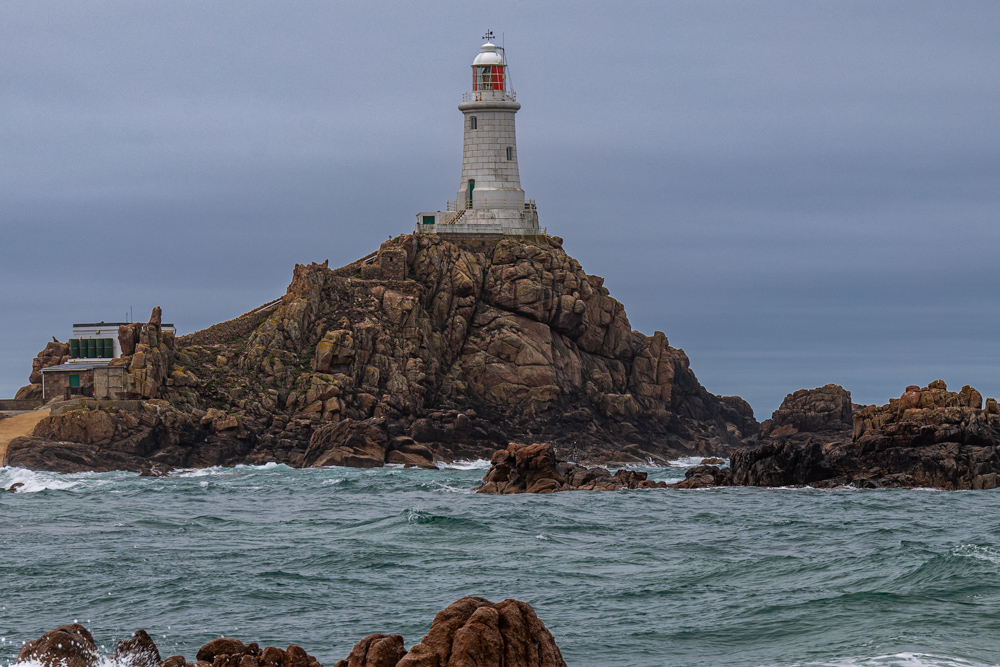
Still at the west of the island we headed to the far south west to La Corbiere where a lighthouse is perched on a rocky outcrop 400 yards offshore.
It is reachable by foot at low tide but as you can see not at the time we visited
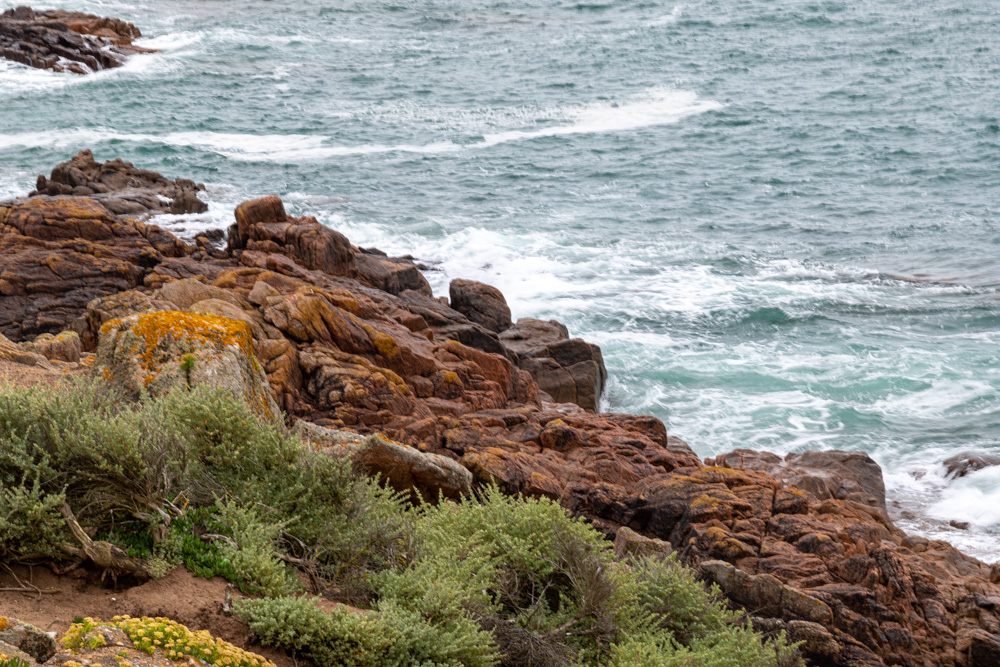
The rocks and extreme tidal variation around this stretch of Jersey’s coast have been treacherous for navigation and La Corbière has been the scene of many shipwrecks, including that of the mail packet Express on 20 September 1859
The lighthouse is situated on a rock that is a tidal island; a causeway links the lighthouse to shore at low tide. There is an alarm to warn visitors to clear the causeway as the tide rises
The lighthouse tower is 19 metres (62 ft) high and the lamp stands 36 metres (118 ft) above high water spring tides. It was first lit on 24 April 1874 and was the first lighthouse in the British Isles to be built of concrete. The lighthouse was built to designs by Sir John Coode. The beam has a reach of 18 nmi (33 km) and was automated in 1976.
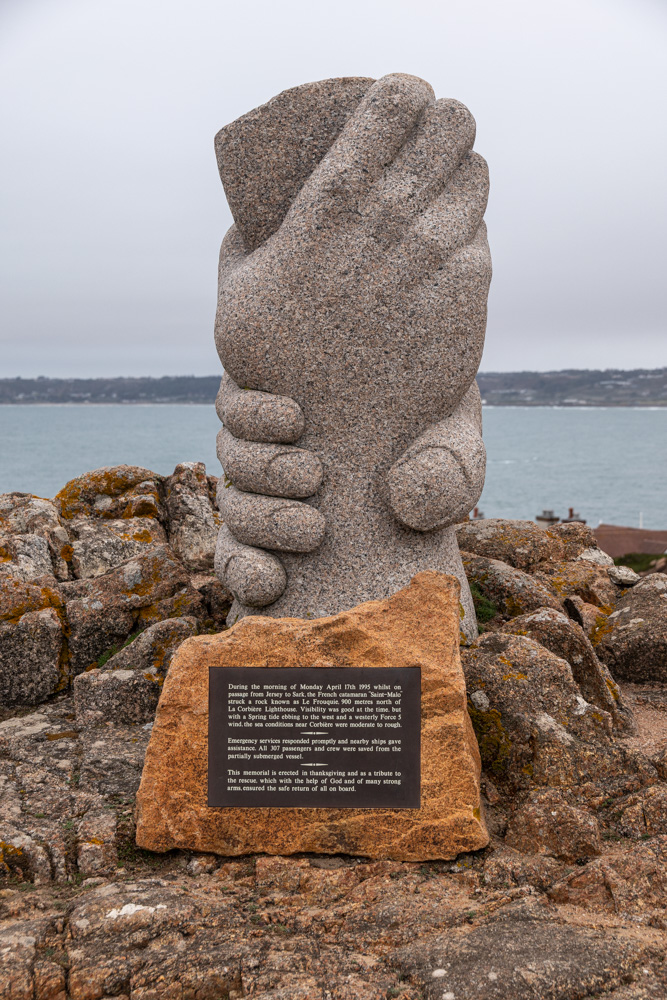
There are numerous mentions of tragedies that have occurred including a monument to 307 people who were rescued from a catarmaran ferry that went aground in 1997

JERSEY WAR TUNNELS
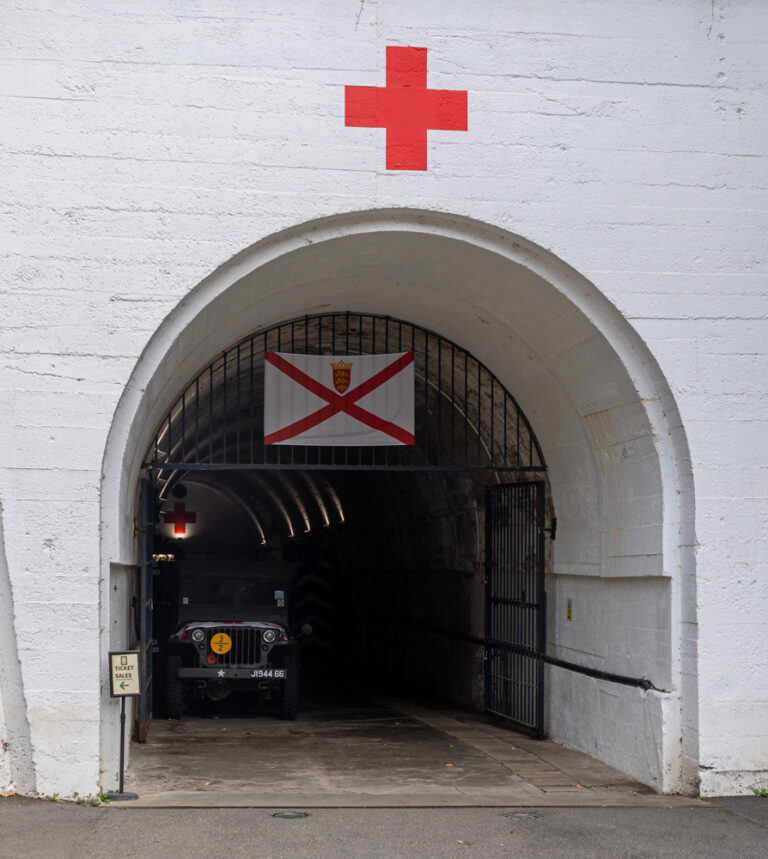
There is only one photo of the Jersey War Tunnels. The main reason was that it was too dark for adequate photos.
The story of the tunnels was more important. When we paid for our tickets, we were given two duplicate identity cards, and our mission was to find out the stories of the people they belong to.
Jersey (as well as the other Channel Islands) was occupied by the Germans from June 1940 to May 1945.
On 15 June 1940, after the Allied defeat in the Battle of France, the British government decided that the Channel Islands were of no strategic importance and would not be defended, but did not tell Germany
Life was interesting during the occupation. For most of the time the islanders were treated fairly. However, there were strict rules around communication and heavy censorship that caused some rifts and passive resistance. There were also some escape attempts and by the end of the war life was tough for both occupiers and occupied alike.
Once the Germans had occupied, they set about fortifying the island
Ho8 (the Jersey War Tunnels) was intended to be a vast network of tunnels that would allow the German occupying infantry to withstand Allied air raids and bombardment.
Forced labourers from the Organisation Todt (as well as paid labourers and skilled workers) were shipped into Jersey and put to work building the complex. Many of the workers were Polish, French, Russian or Republican Spaniards. Conditions were terrible, with cases of malnutrition, death by exhaustion and disease among them becoming common. On the other hand, the voluntary workers from Jersey often had much better conditions, being offered over four times the wages that they would have earned working in similar jobs for the States of Jersey and often receiving extra food rations.
In late 1943, Ho8 was to be converted into a casualty clearing station and emergency hospital. The hospital had 500 beds for patients with a fully equipped operating theatre was installed. Unfinished tunnels were sealed off.
The occupying forces in the Channel Islands surrendered on 9 May 1945 (one day after the rest of the German forces surrendered). Ho8 fell into disuse, with British soldiers and souvenir hunters stripping the tunnels of equipment.
It has now been restored to a permanent reminder of the war years
In all it was a sobering experience
DAY 2 - Mont Orgueil Castle and La Hougue Bie Museum
The castle was first referred to as ‘Mont Orgeuil’ in an ordnance survey made in 1462, when the castle was under French occupation in the Late Middle Ages. The castle was the seat of royal authority on Jersey throughout the medieval period and served as the main fortress on the Island until the construction of Elizabeth Castle in 1594.
Particularly in the Middle Ages occupation went repeatedly between the French and English.
Mont Orgueil (French: Mount Pride) has guarded Jersey’s east coast since the 13th century.
The castle was the primary defence of Jersey for over 400 years
It has operated as a Garrison and a Prison.
The castle decayed over the 18th and 19th Century, and due to its generally ruinous state it was handed over to the people of Jersey by the Crown on 28 June 1907. Mont Orgueil has been managed as a museum site since 1929. During the Second World War German occupation (1940–1945), the castle was occupied by the Germans and used as a billet for troops.
Much restoration has been undertaken, and the castle now operates as a museum
The visit involved a lot of climbing and there were spectacular views to the East and West.
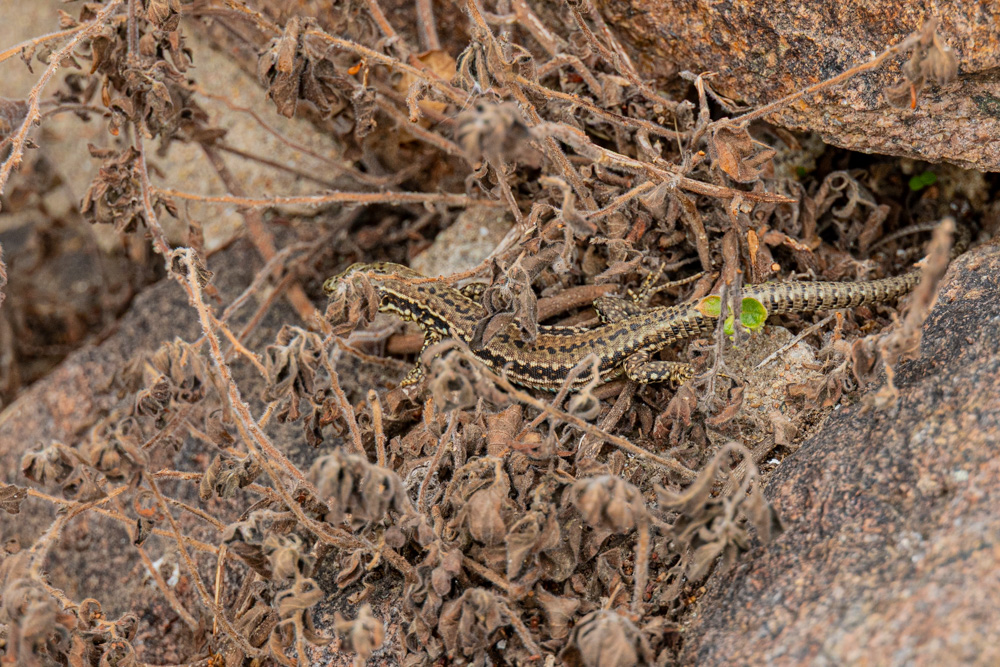
You can always rely on me to uncover an oddity – in fact we have seen this in Barcelona and Madeira – lizards living in cracks in the walls.
We were treated to a Falconry show. Why this attraction? Well this would have reflected the wealth of the occupants of the castle. The more birds – the more powerful the occupants.
La Hougue Bie Museum
Hougue is a variant form of the more common Norman form Hogue. It means “heap”, “how”, “mound” and comes from the Old Norse word haugr meaning about the same thing.
Neolithic Origins (c. 4000–3500 BC)
• The Mound and Tomb: Early farmers built a massive earth mound (12.2 meters high and 58 meters wide) covering a long stone passage grave and sacred inner chambers.
• Equinox Alignment: The passage aligns with the rising sun during the spring and autumn equinoxes, allowing sunlight to pierce straight to the back of the inner chamber.
• Use and Abandonment: Used for centuries for sacred and ceremonial rituals, the tomb eventually had its human remains and offerings sealed before the site was left behind.
Medieval 12th–16th Century)
• Chapel Construction: Christian missionaries took over the pagan site in the 12th century by building a stone-vaulted chapel on top of the ancient mound.
• Pilgrimage Centre: The structure was expanded in 1520 with the addition of the Jerusalem chapel and crypt, becoming a busy local pilgrimage destination before falling into ruin following the Reformation.
The Prince’s Tower and Pleasure Grounds (18th–19th Century)
• Neo-Folly: Philippe d’Auvergne (the Duke of Bouillon) bought the property and converted the ruined chapel into a Neo-Gothic lookout tower known as the Prince’s Tower between 1792 and 1793.
• Tourism Beginnings: The surrounding area was shaped into a picturesque Regency pleasure garden and hotel, turning the site into a famous romantic tourist landmark.
Modern Excavation and World War II (20th Century)
• Rediscovery: The Prince’s Tower and hotel were torn down in 1924, and the Société Jersiaise excavated the mound to reveal the hidden Neolithic passage grave beneath.
• German Occupation: German forces occupied Jersey in World War II and carved a command bunker directly into the side of the prehistoric mound between 1942 and 1945.


DAY 3 - Jersey Zoo
Yet another day when I couldn’t recognise where we went 47 years ago. However, it is not surprising when you realise all the changes that have been completed over the intervening period.
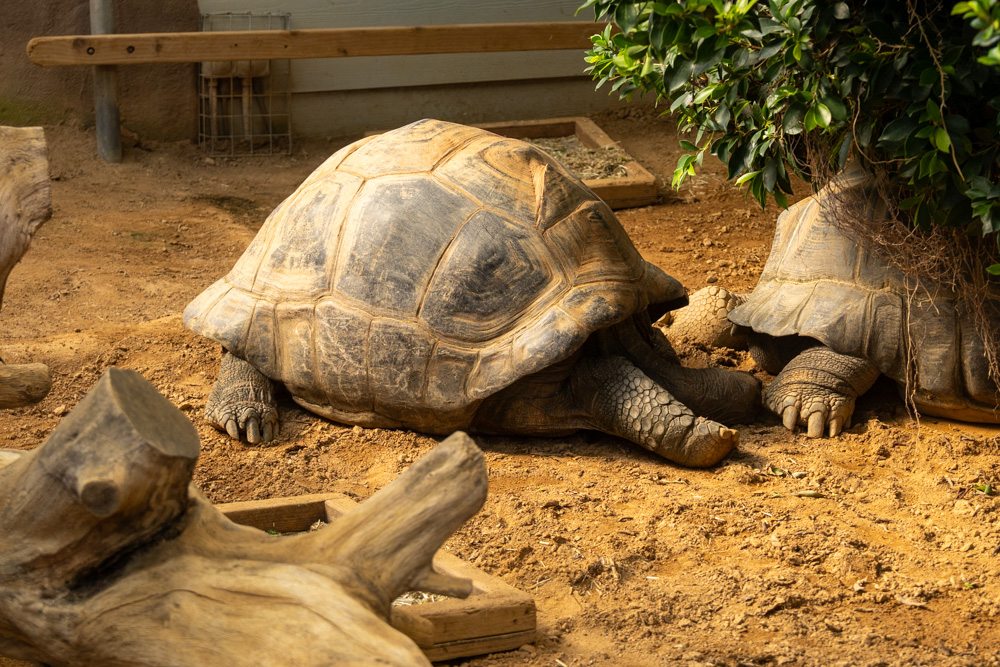
The zoo still sticks to the principles of its founder, Gerald Durrell who was passionate about conservation of endangered species.
I do remember the Orangutans -they were in cages in 1979 but now have their own dedicated outside enclosure which was more stimulating than the restricted cages of yesteryear.
I remember Cheetahs because I raced along the enclosure fence in attempt to encourage them to run. Sadly (for me) there were no cats of any description.
However as noted before there have been many changes in the operation of the trust that now runs the zoo.
The zoo had a homely feel because it was not unduly large but had enough to maintain interest throughout the whole day.
The highlight of the day – the butterfly house. Butterflies are notoriously difficult to photograph because of their flighty nature – imagine my delight when a butterfly settled on the hand of a young girl.







DAY 4 - Elizabeth Castle
Our last day on the Island was spent in St Helier. We might have wanted to have visited other places, but we were effectively confined to St Helier as we couldn’t release the car we had been driving from the hotel car park.
The reason – a major international triathlon was being held and most of the surrounding roads were closed.
It wasn’t a problem as there is plenty to do there -Elizabeth Castle, Maritime Museum, Cultural Museum and Fort Regent.
This promised to be a busy day.
We decided to visit Elizabeth Castle first and take the day from there.
As it happens, we spent the whole enjoyable day there!!
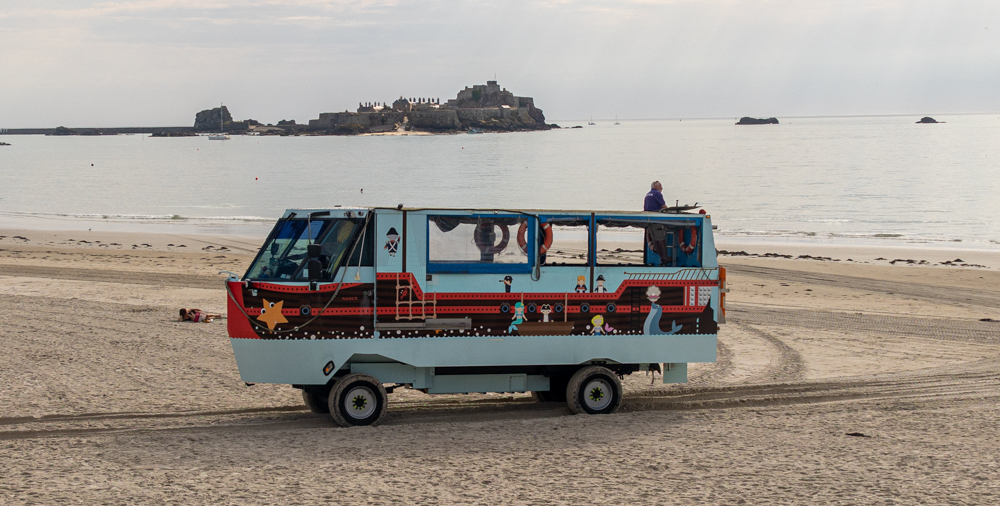
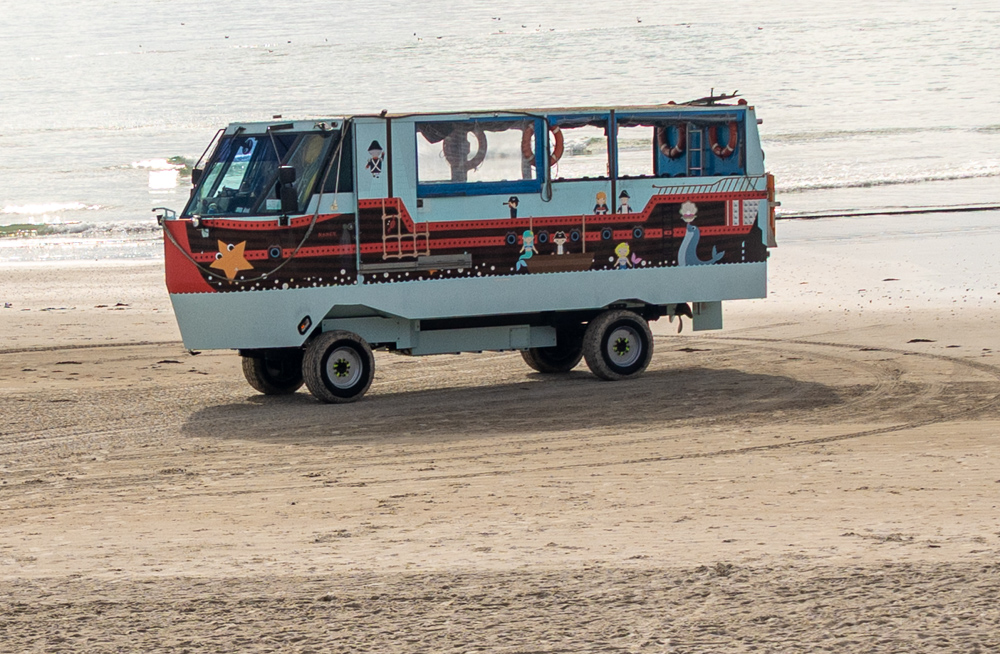
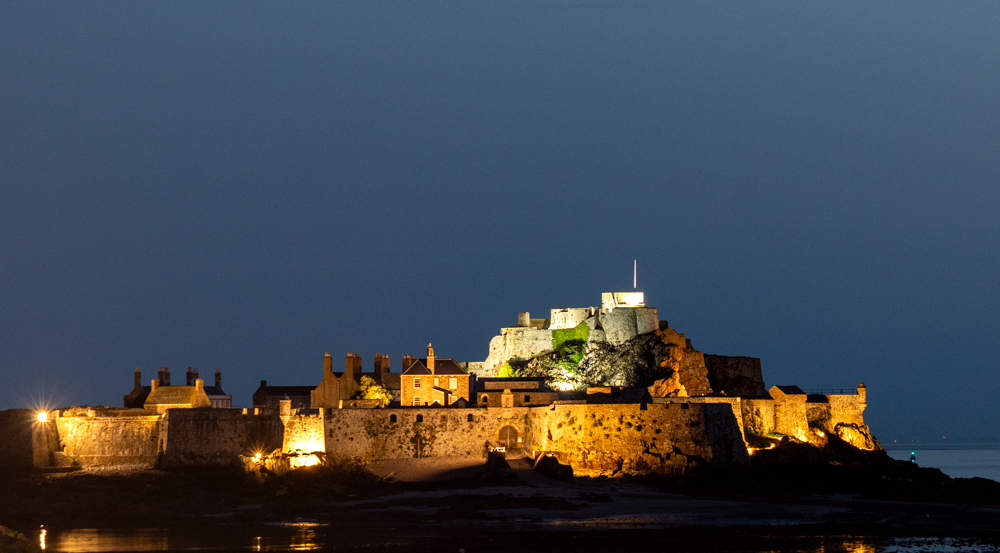
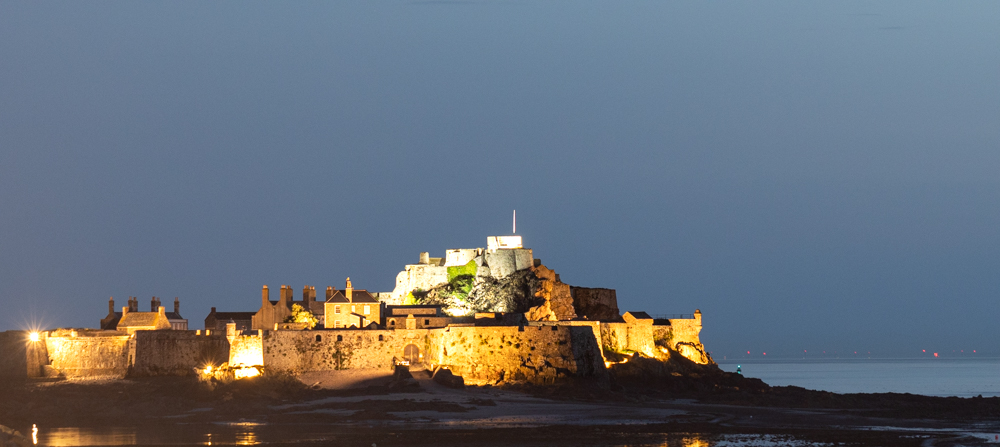
Elizabeth Castle sits in St Helier Bay about half a mile from shore and is normally accessible on foot t low tide via a stone causeway. We thought that this would be way we would reach the castle, but the tides were unpredictable that day and we had to make the crossing by D, 1942 production series U, Utility, K, all-wheel drive, W, tandem rear axles, both driven or called DUKW pronounced Duck. It is capable of 50mph on land or 8 knots in the water.
I thought that this would be of second world war vintage but was surprised to learn that this civilian version was only 18 years old!!
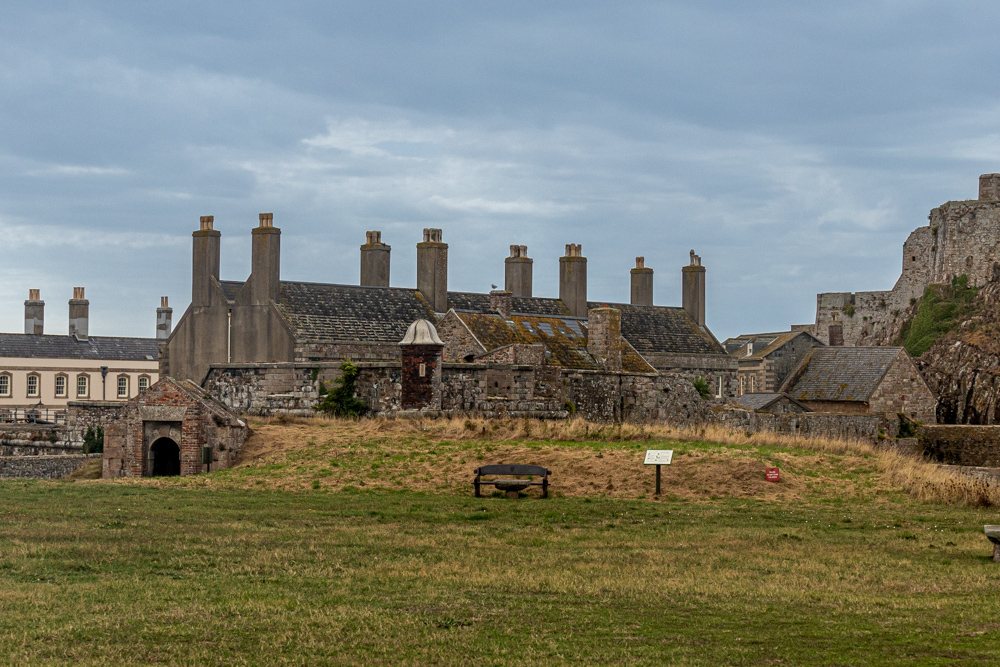
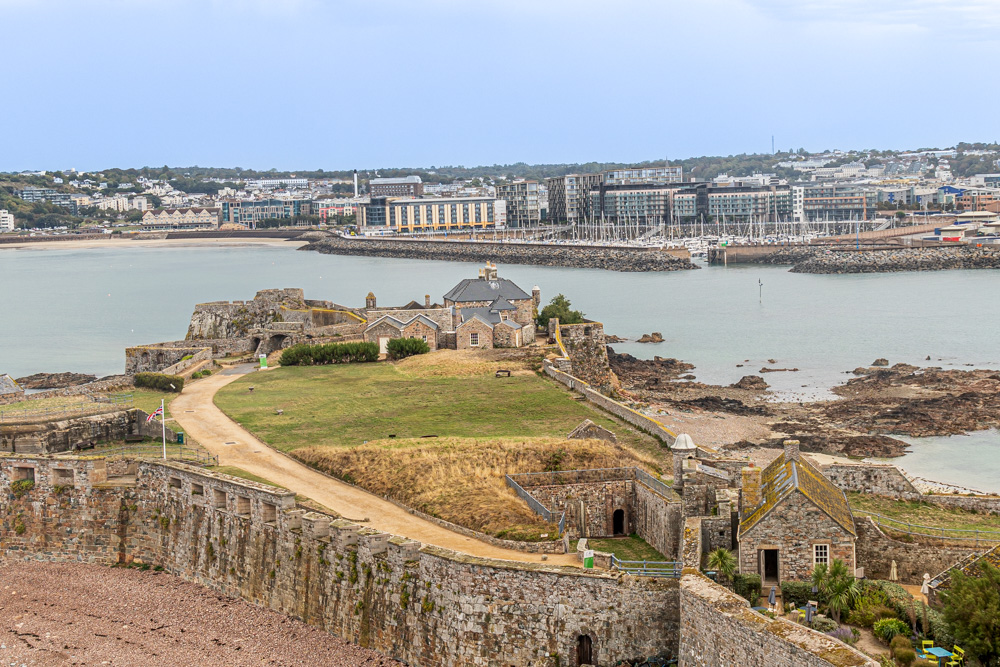
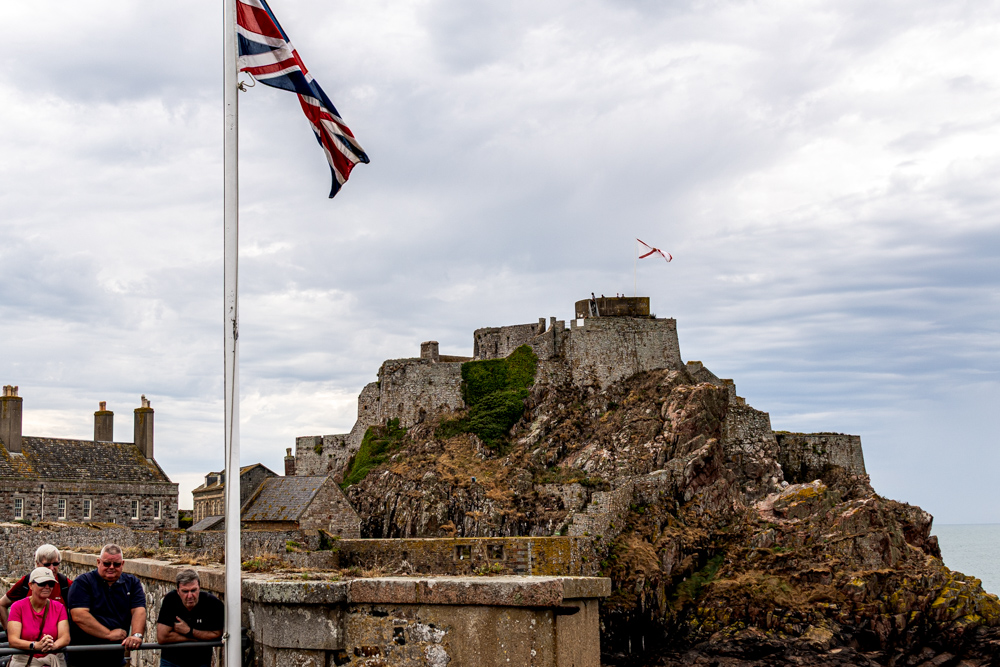
Elizabeth Castle – Construction was started in the 16th century when the power of the cannon meant that the existing stronghold at Mont Orgueil was insufficient to defend the Island and the port of St Helier was vulnerable to attack by ships armed with cannons.
It is named after Elizabeth I who was queen of England around the time the castle was built.
Sir Walter Raleigh, Governor of Jersey between 1600 and 1603, named the castle Elizabeth Castle after Elizabeth I of England.
A two-storey barracks hospital building was constructed in the early 19th century.
The British government withdrew the garrison and relinquished the castle to the States of Jersey in 1923. The States then opened it to the public as a museum.
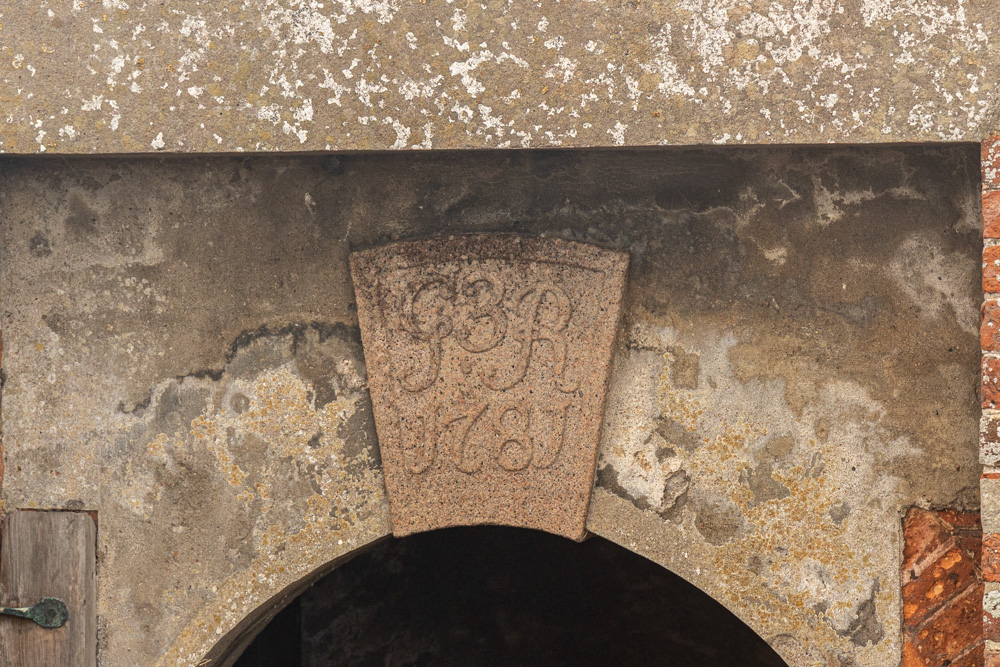
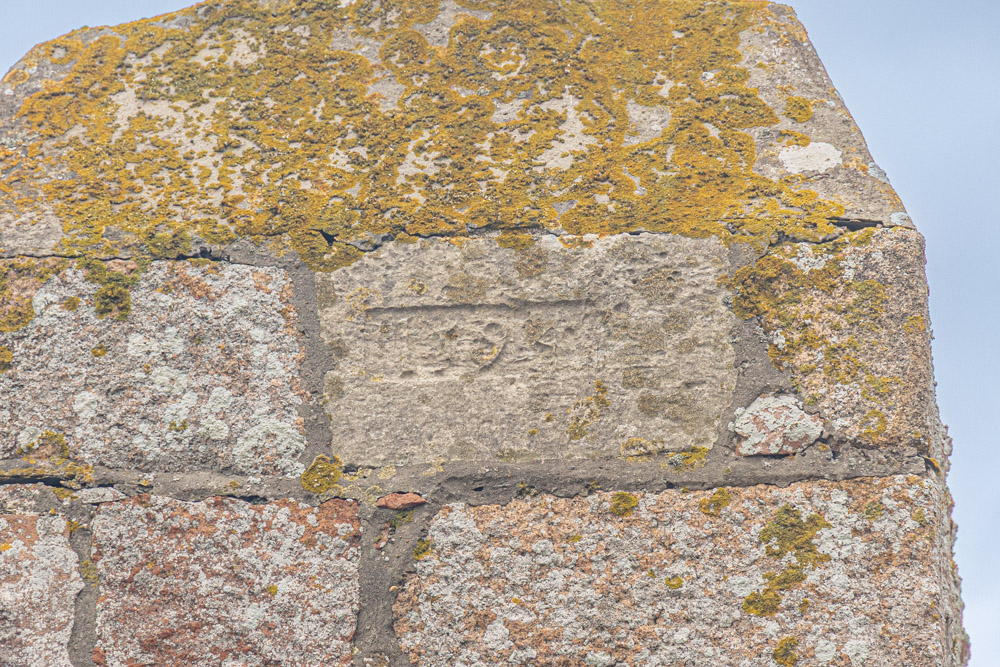
During the Second World War the Germans, who occupied the Channel Islands, modernised the castle with guns, bunkers and battlements. After the Liberation, the castle was repaired and was eventually re-opened to the public. The Germans left their mark on the Castle – a gun emplacement complete with handwritten range find instructions and visible damage to the keystone of the entry arch – because its vehicles were too tall to pass underneath.
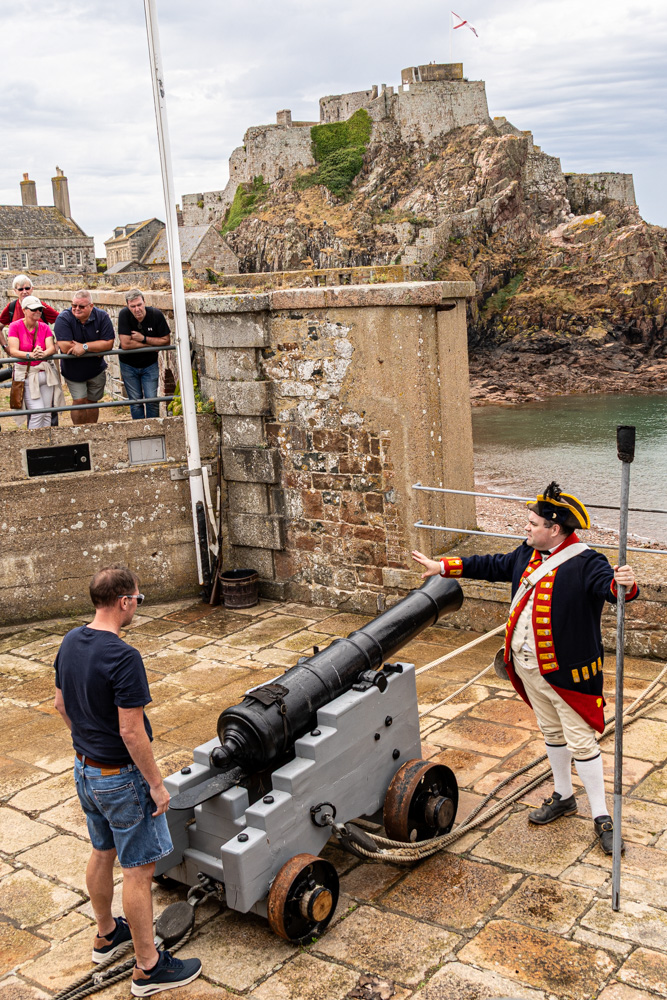
Every Sunday through the season when the castle is open, a team of Historical Interpreters recreate the garrison of 1781, at the time of the Battle of Jersey. They give displays of musket and cannon firing, and civilian life. The firing of the cannon is loud as my wife’ s ears will testify!
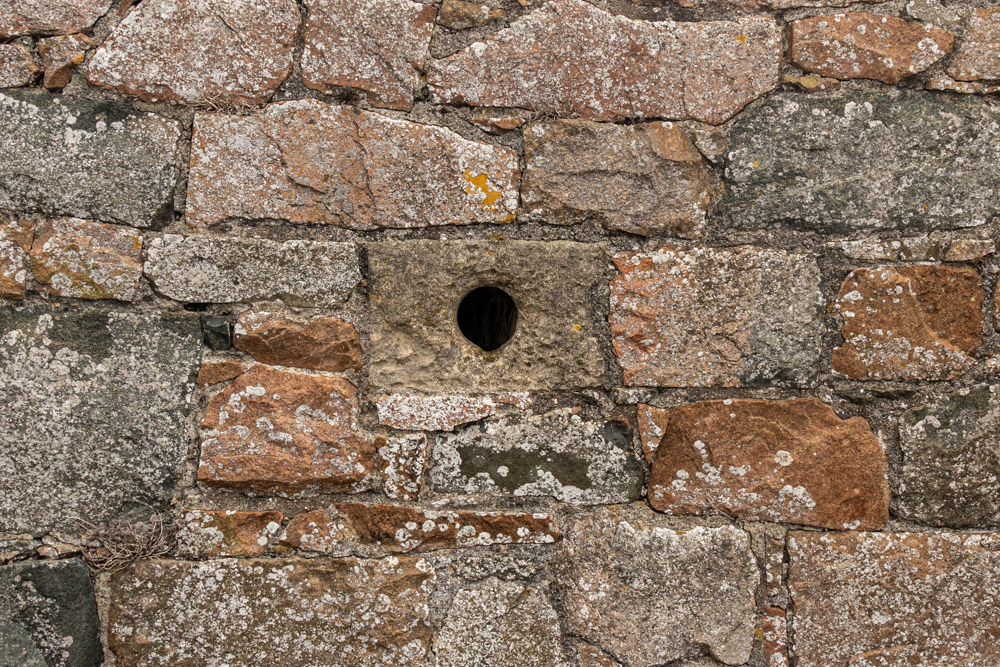
I usually find something amusing about a visitor attraction. Over the years the castle has been guarded by soldiers who spent long hours on duty. The shelter from the wind was cramped to say the least and the toilets were rudimentary to say the least no more than a hole in the wall. No one was allowed to desert their post.
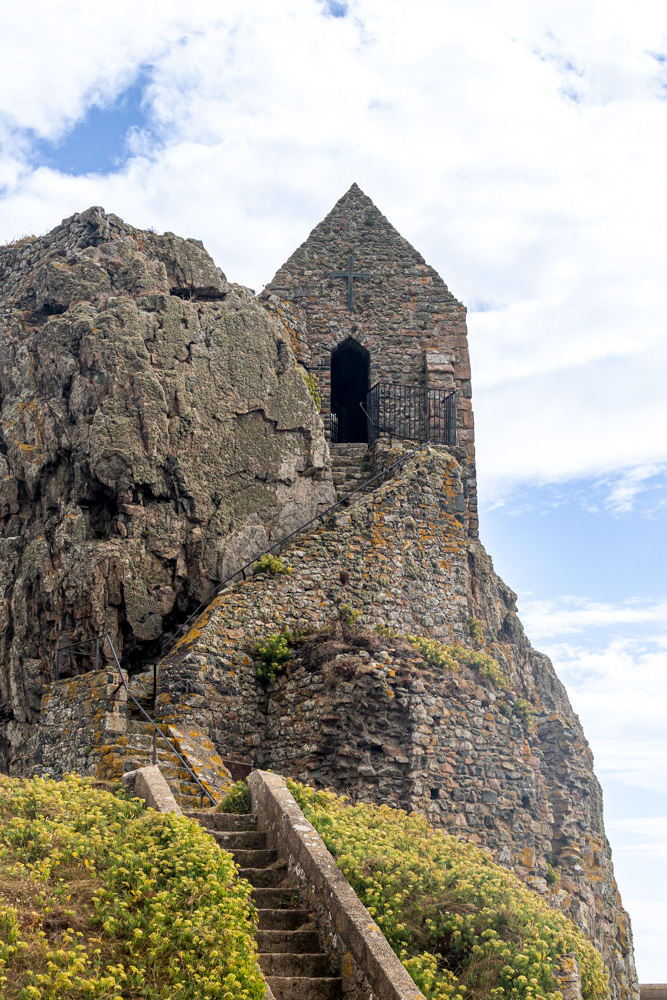
To the rear of the Castle there is a modern-day walkway. Almost 1500 years ago this didn’t exist and there was a huge rocky outcrop on top of which was a hermitage inhabited by Helier, a monk who had come to Jersey for solitude and to assist the fisherman. His hermitage was a good lookout for pirates, and he successfully saw them off until one day they caught him and decapitated him. Legend has it that he ran to shore with his head under his arm before collapsing and dying. That is the story of Helier now venerated as St Helier – whose Saints Day is July 16.