Jersey Experience September 2026
A few days away on another charming island
This is the story of 4 days away exploring the delights of the largest of the Channel Islands – Jersey.
This is a beautiful island 133 miles south of Portsmouth and 38 miles north of St Malo in France in the English Channel.
This is our 2nd visit to the island – the first was in May 1979. This was our honeymoon and we flew there from Southend. Our intention was to revisit but did not manage it. Plans were in place in 2019 to celebrate our 40th Wedding Anniversary – flying from Southend and staying in a better hotel than we could afford then. Sadly Maura could not fly because of a recent eye operation. 2020 Covid came. 2021 came and EasyJet had stopped flying from Southend. The reason for going in the way we wanted had evaporated. 2025 came and Yes – EasyJet had resumed flights. It took me 10 minutes to book the flight, hotel and hire car!
Walking seems to have been at the centre of most of our holidays and Jersey was no exception – an average of 14,000 steps over 4 days
DAY 1 - GETTING THERE
Getting there couldn’t have been easier. Another early start but it easy to get to Southend Airport. The airport has the advantage of being smaller than Gatwick or Stansted. Even two flights departing within minutes of each other was stress free.
The flight took off on time – published flight time 1hr 10mins. No sooner we were up and settled – the call to fasten seatbelts again. Total flight time – 45mins!
Having left Southend at 6.40am – we had collected our luggage and hire car by 8.00am
DAY 1 - ST BRELADES BAY, LA CORBIERE AND JERSEY WAR TUNNELS
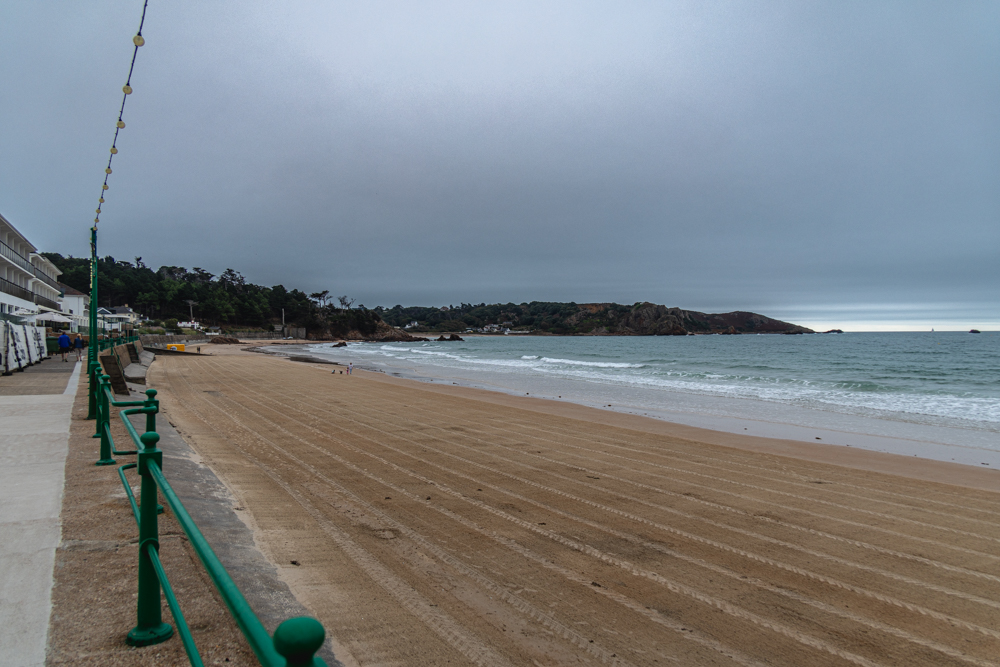
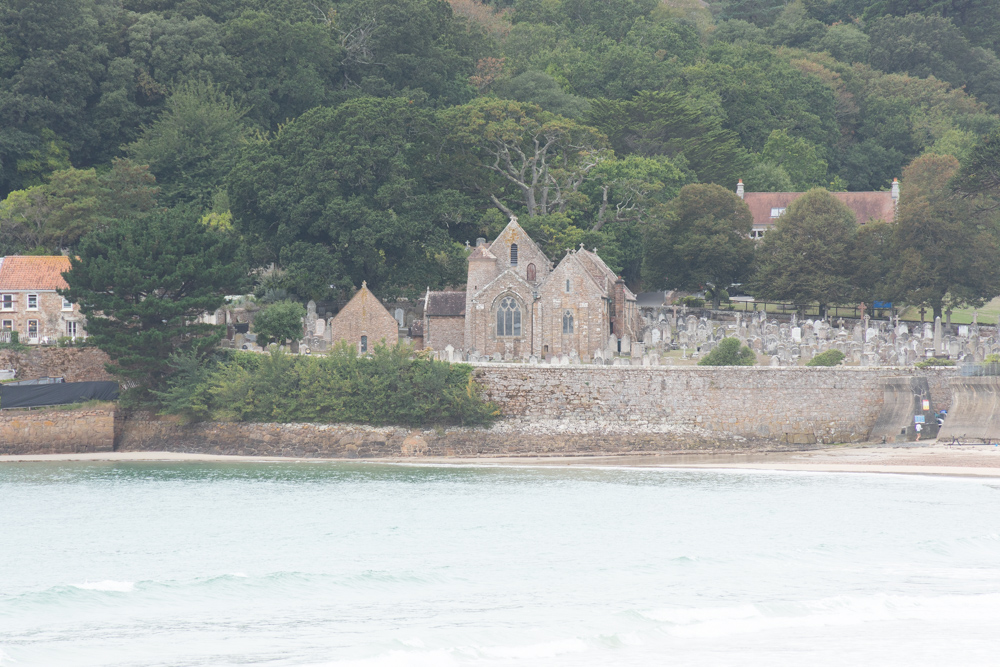
ST BRELADES BAY
Leaving the airport at 8.00am presented us with several choices and the earliness of the hour some challenges as well!!
The choice was made – St Brelade’s Bay – no particular reason other than a distant memory of somewhere pleasant.
The challenge was to find somewhere open – a coffee at the very least. Almost impossible at 8.15am and maybe slightly out of season
Thankfully a cafe opened at 9.00am and a hearty English Breakfast was consumed – a walk afterwards to work off its effects
LA CORBIERE
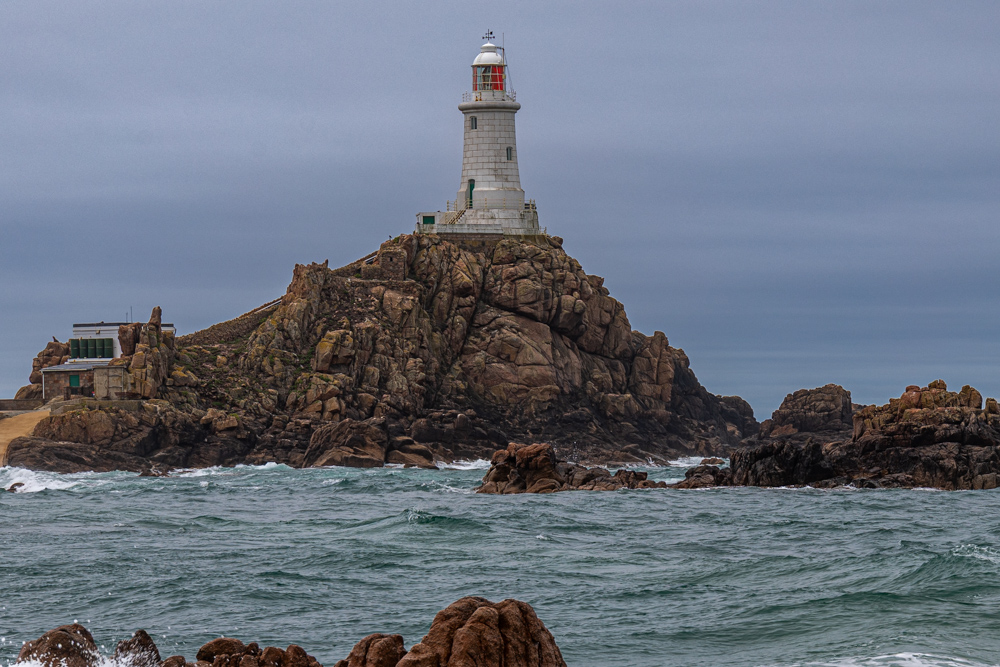
Still at the west of the island we headed to the far south west to La Corbiere where a lighthouse is perched on a rocky outcrop 400 yards offshore.
It is reachable by foot at low tide but as you can see not at the time we visited
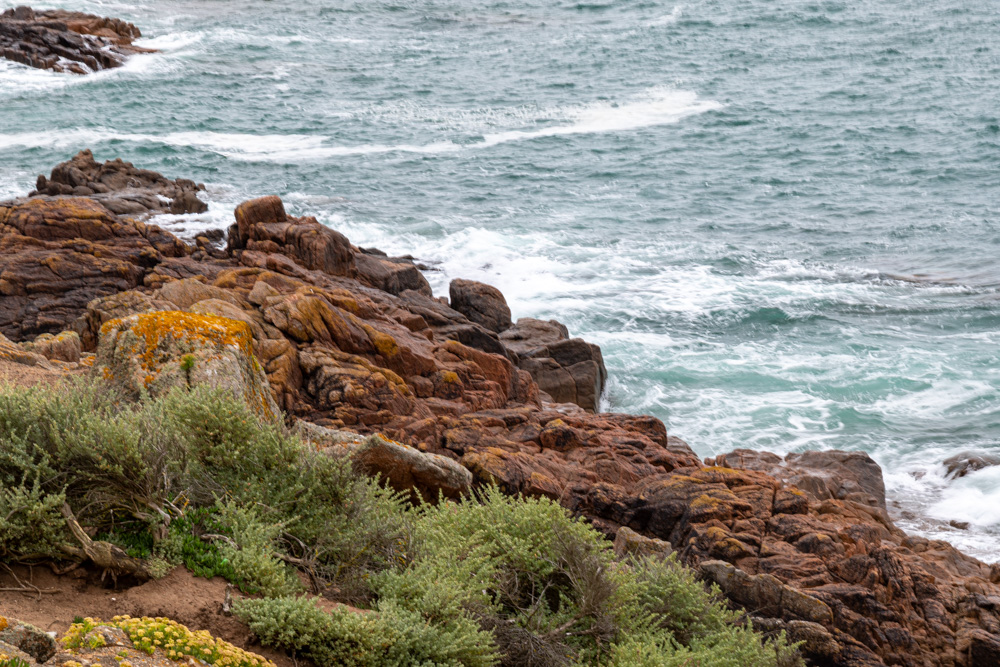
The rocks and extreme tidal variation around this stretch of Jersey’s coast have been treacherous for navigation and La Corbière has been the scene of many shipwrecks, including that of the mail packet Express on 20 September 1859
The lighthouse is situated on a rock that is a tidal island; a causeway links the lighthouse to shore at low tide. There is an alarm to warn visitors to clear the causeway as the tide rises
The lighthouse tower is 19 metres (62 ft) high and the lamp stands 36 metres (118 ft) above high water spring tides. It was first lit on 24 April 1874 and was the first lighthouse in the British Isles to be built of concrete. The lighthouse was built to designs by Sir John Coode. The beam has a reach of 18 nmi (33 km) and was automated in 1976.
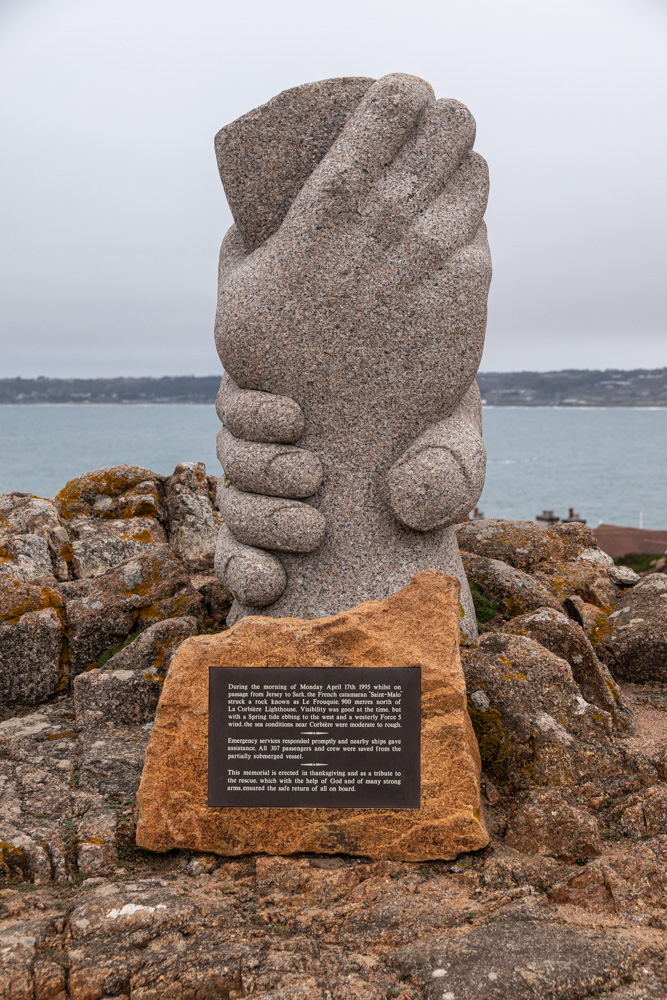
There are numerous mentions of tradegies that have occurred including a monument to 307 people who were rescued from a catarmaran ferry that went aground in 1997
JERSEY WAR TUNNELS
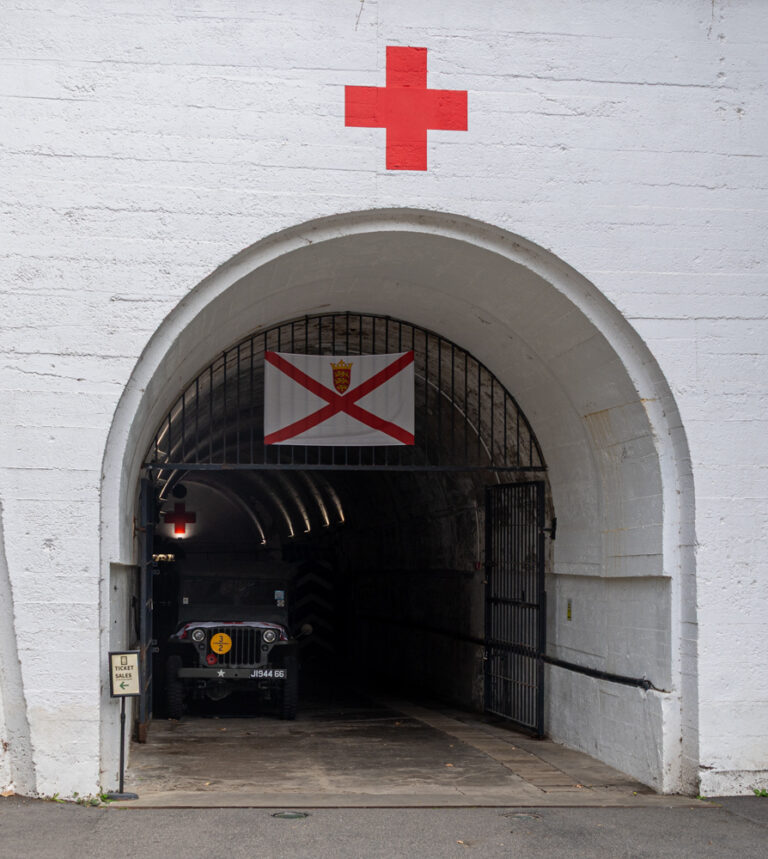
There is only one photo of the Jersey War Tunnels. The main reason was that it was too dark for adequate photos.
The story of the tunnels was more important. When we paid for our tickets, we were given two duplicate identity cards, and our mission was to find out the stories of the people they belong to.
Jersey (as well as the other Channel Islands) was occupied by the Germans from June 1940 to May 1945.
On 15 June 1940, after the Allied defeat in the Battle of France, the British government decided that the Channel Islands were of no strategic importance and would not be defended, but did not tell Germany
Life was interesting during the occupation. For most of the time the islanders were treated fairly. However, there were strict rules around communication and heavy censorship that caused some rifts and passive resistance. There were also some escape attempts and by the end of the war life was tough for both occupiers and occupied alike.
Once the Germans had occupied, they set about fortifying the island
Ho8 (the Jersey War Tunnels) was intended to be a vast network of tunnels that would allow the German occupying infantry to withstand Allied air raids and bombardment.
Forced labourers from the Organisation Todt (as well as paid labourers and skilled workers) were shipped into Jersey and put to work building the complex. Many of the workers were Polish, French, Russian or Republican Spaniards. Conditions were terrible, with cases of malnutrition, death by exhaustion and disease among them becoming common. On the other hand, the voluntary workers from Jersey often had much better conditions, being offered over four times the wages that they would have earned working in similar jobs for the States of Jersey and often receiving extra food rations.
In late 1943, Ho8 was to be converted into a casualty clearing station and emergency hospital. The hospital had 500 beds for patients with a fully equipped operating theatre was installed. Unfinished tunnels were sealed off.
The occupying forces in the Channel Islands surrendered on 9 May 1945 (one day after the rest of the German forces surrendered). Ho8 fell into disuse, with British soldiers and souvenir hunters stripping the tunnels of equipment.
It has now been restored to a permanent reminder of the war years
In all it was a sobering experience
DAY 2 - Mont Orgueil Castle and La Hougue Bie Museum
Mont Orgueil Castle
Lorem ipsum dolor sit amet, consectetur adipiscing elit. Ut elit tellus, luctus nec ullamcorper mattis, pulvinar dapibus leo.
La Hougue Bie Museum
Lorem ipsum dolor sit amet, consectetur adipiscing elit. Ut elit tellus, luctus nec ullamcorper mattis, pulvinar dapibus leo.